
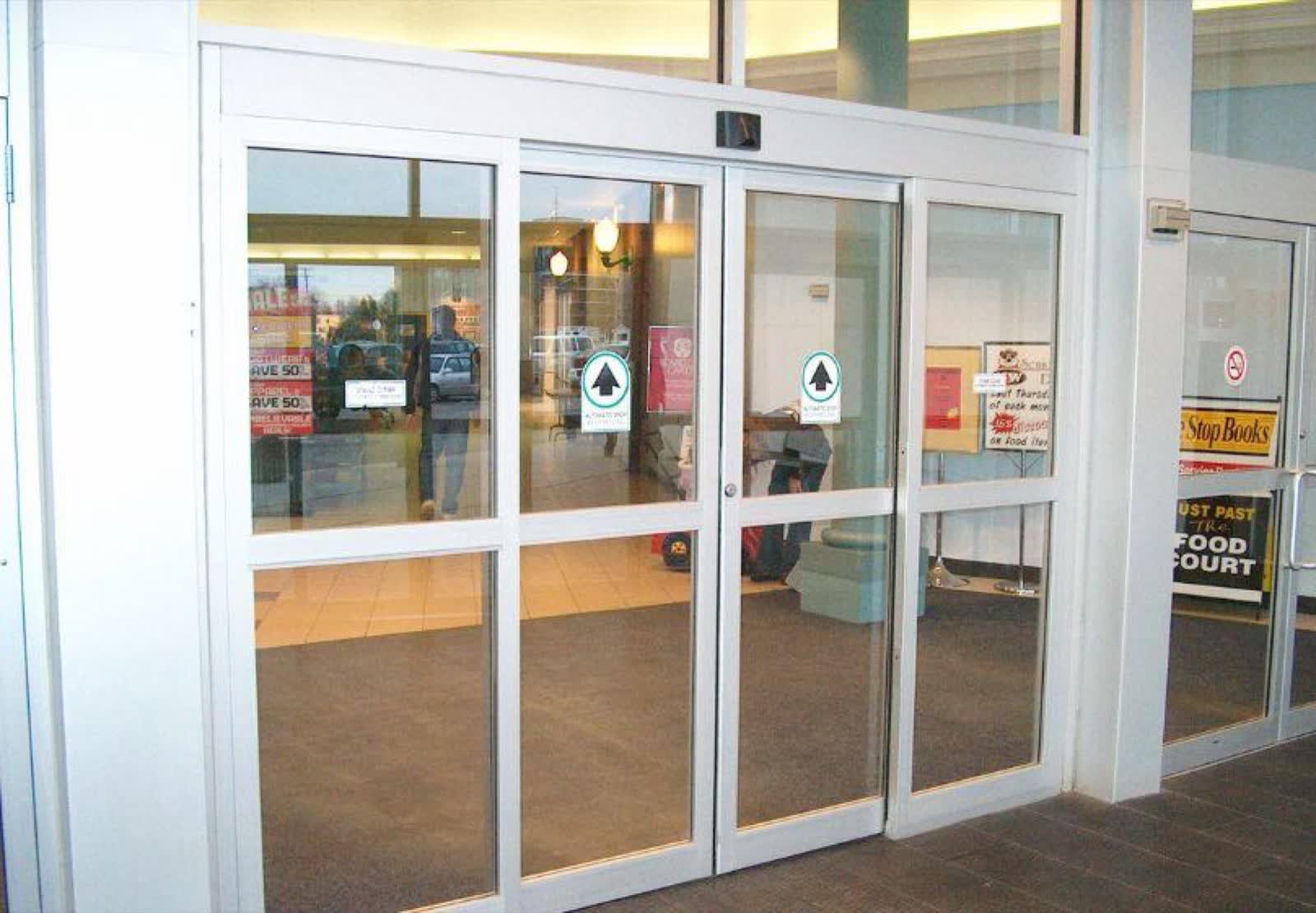
A front door that won't open is turning customers around in the parking lot right now — and one that sticks, stutters, or closes too hard is worse: it's a safety incident waiting for a slow-moving customer. Before you call, three checks solve a surprising share of “broken” automatic doors in about two minutes, and none of them involve tools.
1. The mode switch
Nearly every automatic door has a function switch (often keyed) with positions like OFF / HOLD OPEN / AUTOMATIC / EXIT ONLY. Overnight staff set it to OFF or EXIT ONLY at closing — and mornings get busy. If your door “broke” overnight, check the switch before anything else. You'd be in good company.
2. Power
Confirm the breaker feeding the door hasn't tripped. Storm season in central Arkansas flips breakers regularly, and door operators are easy to overlook on the panel schedule. If the breaker trips again after one reset, stop — that's an electrical fault, not a reset ritual.
3. Sensors and the path
Look up at the sensor above the door. Signage taped nearby, seasonal displays, hanging decorations, even a busy poster inside the glass can block or confuse detection. Wipe the sensor lens — dust, spider webs, and (yes) wasp nests are regulars. And check the track and threshold for grit, mats, or debris; a sliding door dragging on a mat corner will stutter, stall, and eventually stop.
What NOT to do
Don't force a stuck door — you can bend panels and damage the operator, turning a sensor adjustment into a major repair. Don't leave a misbehaving door in automatic mode. A door that hesitates, reverses randomly, or closes hard on people is a liability in motion: switch it to manual or hold-open, put up signage, and call. Don't send anyone up a ladder to open sensor housings — detection zones are set to a standard (measured, not eyeballed), and a well-meaning tweak can make a door pass the lobby test and still be unsafe.
Symptoms that mean call now
- The door closes harder or faster than it used to — force and speed are safety-standard items.
- It opens for some people but misses others — a detection-zone fault, the most dangerous kind.
- Grinding, squealing, or belt noise — mechanical wear headed toward failure.
- It works, then doesn't, intermittently — controllers and sensors fail intermittently first.
Why the brand matters less than you'd think
Horton, Stanley Access, ASSA ABLOY, Besam, Nabco, Record, Dorma, Gyro Tech — our AAADM-certified technicians service all of them, and carry parts to fix most automatic door repairs on the first visit. Fifty years of central Arkansas commercial service is behind that. If the two-minute checks above didn't bring your door back, call 501-548-2374 — 24/7 — and switch the door to manual until we get there.
Frequently asked questions
Why does my automatic door open for some people but not others?
That's a detection-zone problem — the sensor's coverage has drifted, narrowed, or been partially blocked, so slower or smaller-profile traffic gets missed. It's the most safety-critical symptom on the list and needs a certified technician, not an adjustment by eye.
Can I keep using a door that's sticking?
Take it out of automatic mode. A sticking door is telling you about a mechanical or sensor fault, and doors that misbehave around the public are a liability risk. Manual or hold-open mode keeps the entrance usable until it's repaired.
Do you service doors you didn't install?
Yes — all major brands. AAADM certification is brand-independent, and our trucks stock common parts across manufacturers, which is why most repairs finish on the first visit.